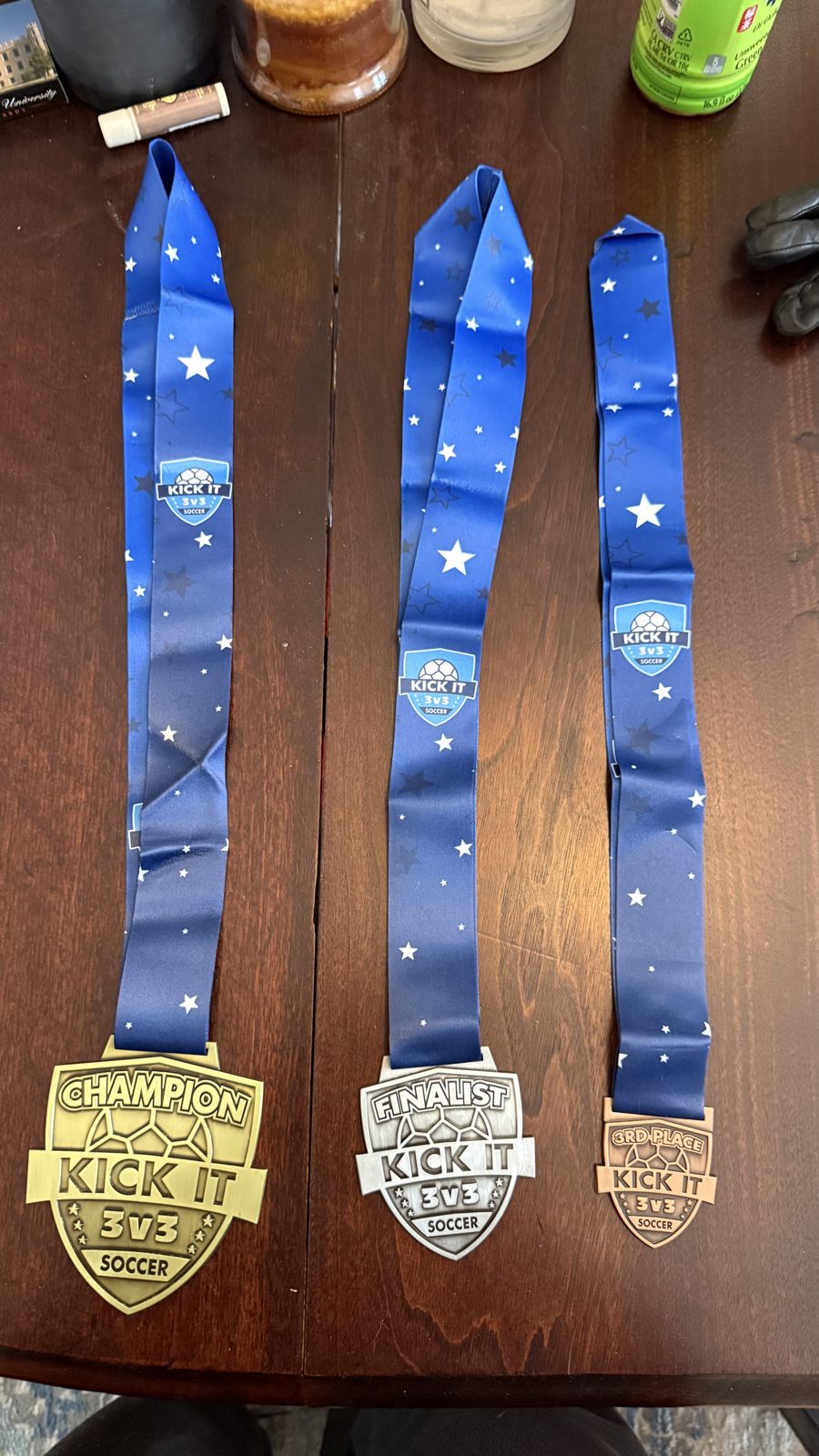
3v3 Soccer Rules and How It Works
These are the official Kick It 3v3 soccer rules we use at our tournaments. We've been running 3v3 events since 1990, and the rules have been tweaked over the years to do two things: keep the game fast, and get every player a ton of touches on the ball. If you're new to 3v3, start with how 3v3 soccer works. If you just need the game length, jump to how long 3v3 soccer games are.
A quick note before you dig in. Any situation not covered in these rules is decided by the tournament director at the event. Rules can also be adjusted for a specific event, and if they are, we'll say so on that event's page.
How Does 3v3 Soccer Work?
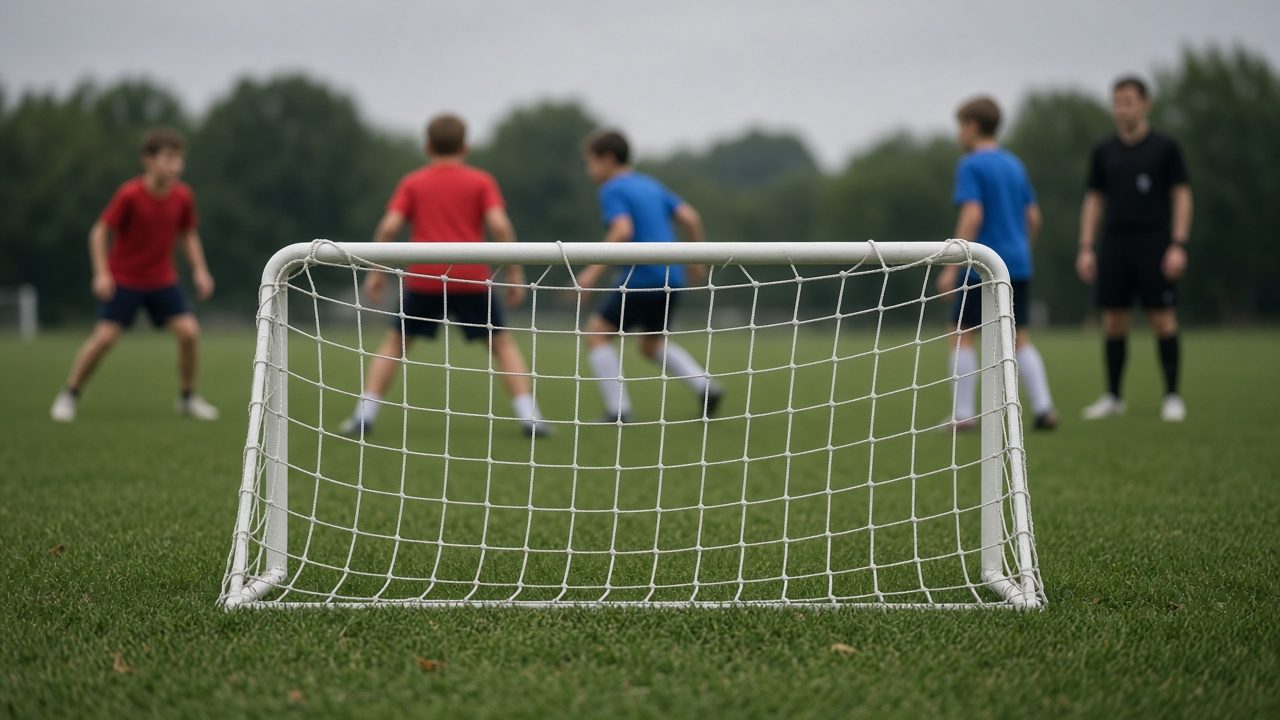
3v3 soccer is soccer with three players per team on the field at a time, played on a small field with small goals. At Kick It events there are no goalkeepers. Instead, there's a crease in front of each goal that nobody is allowed to touch the ball inside, so you can't just park a defender on the goal line.
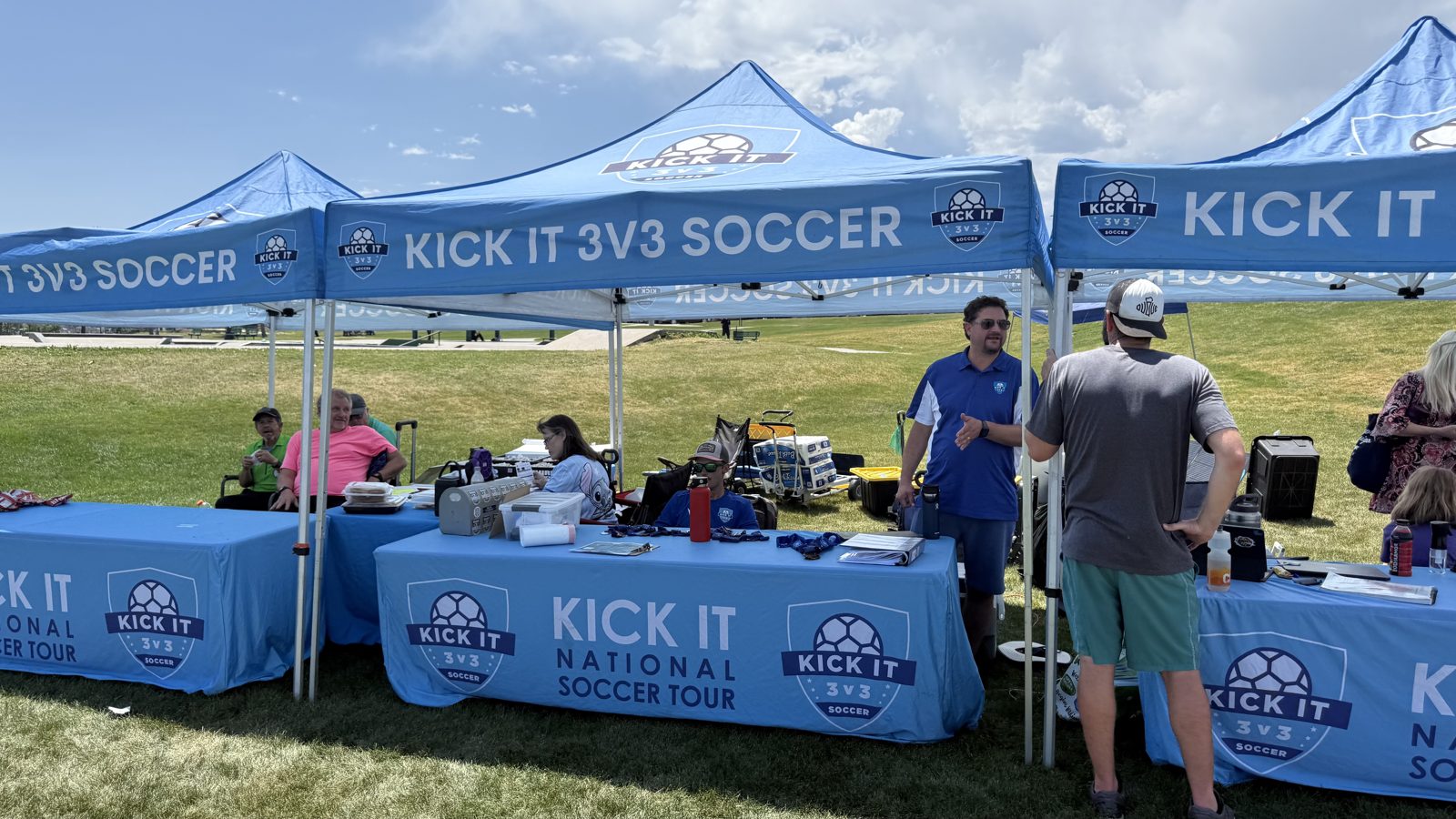
Here's the short version of how a Kick It tournament works:
- Build a team. Three to six players. Most teams have four or five.
- Register in a division. Youth teams play in the division of their oldest player. There are boys, girls, and adult divisions.
- Play pool play. Your team plays a set of games against teams in your division and earns points for wins and ties.
- Advance to playoffs. Based on pool play, teams move into playoff brackets.
- Win the bracket. Playoff games must have a winner, with a golden goal overtime and penalty shootout if needed.
One-day events guarantee four games, and multi-day events guarantee at least six. The rest of this page covers the details.
What makes it different from bigger soccer? No offsides. Kick-ins instead of throw-ins. No slide tackles. And with only three players a side, you can't hide. Everybody attacks, everybody defends, and there's a goal every one to two minutes in nearly every game. If you want the longer case for why we play this way, read why Kick It 3v3 soccer.
3v3 Soccer Rules: The Quick List
If you only read one section, read this one. These are the rules that come up most at our events. Details for each are further down the page.
| Rule | Kick It 3v3 |
|---|---|
| Players on the field | 3 per team |
| Roster size | 3 to 6 players |
| Goalkeepers | None |
| Game length | Two 12-minute halves, 2-minute halftime |
| 12-goal cap | Score at 12 goals is final; teams play out the time |
| Offside | None |
| Out of bounds | Kick-ins, not throw-ins |
| Sliding (any time a hand touches the ground) | Not allowed; indirect kick |
| Penalty kick | For stopping an obvious goal-scoring opportunity, or for a violent foul or one that draws a yellow or red card |
| Heading | Allowed at U12 and older only (no heading U11 and younger) |
| Goals | Must be played from the attacking half |
| Crease (a half circle in front of the goal that extends 8 feet out, or a 12 ft wide x 6 ft deep box) | No one may touch the ball inside it |
| Dead-ball distance | Defenders stay 10 feet from the ball |
| Restart time | 5 seconds |
| Blowout rule | Team down by 6 may add a 4th player |
| Pool play points | Win 3, tie 1, loss 0, forfeit counts as a 5-0 loss |
3v3 Soccer Roster and Divisions
Number of players: Each team can have a minimum of 3 and a maximum of 6 players on the roster. Most teams have 4 or 5, but we see teams of 3 win tournaments sometimes. A team of three has no subs, so they'd better be in shape.
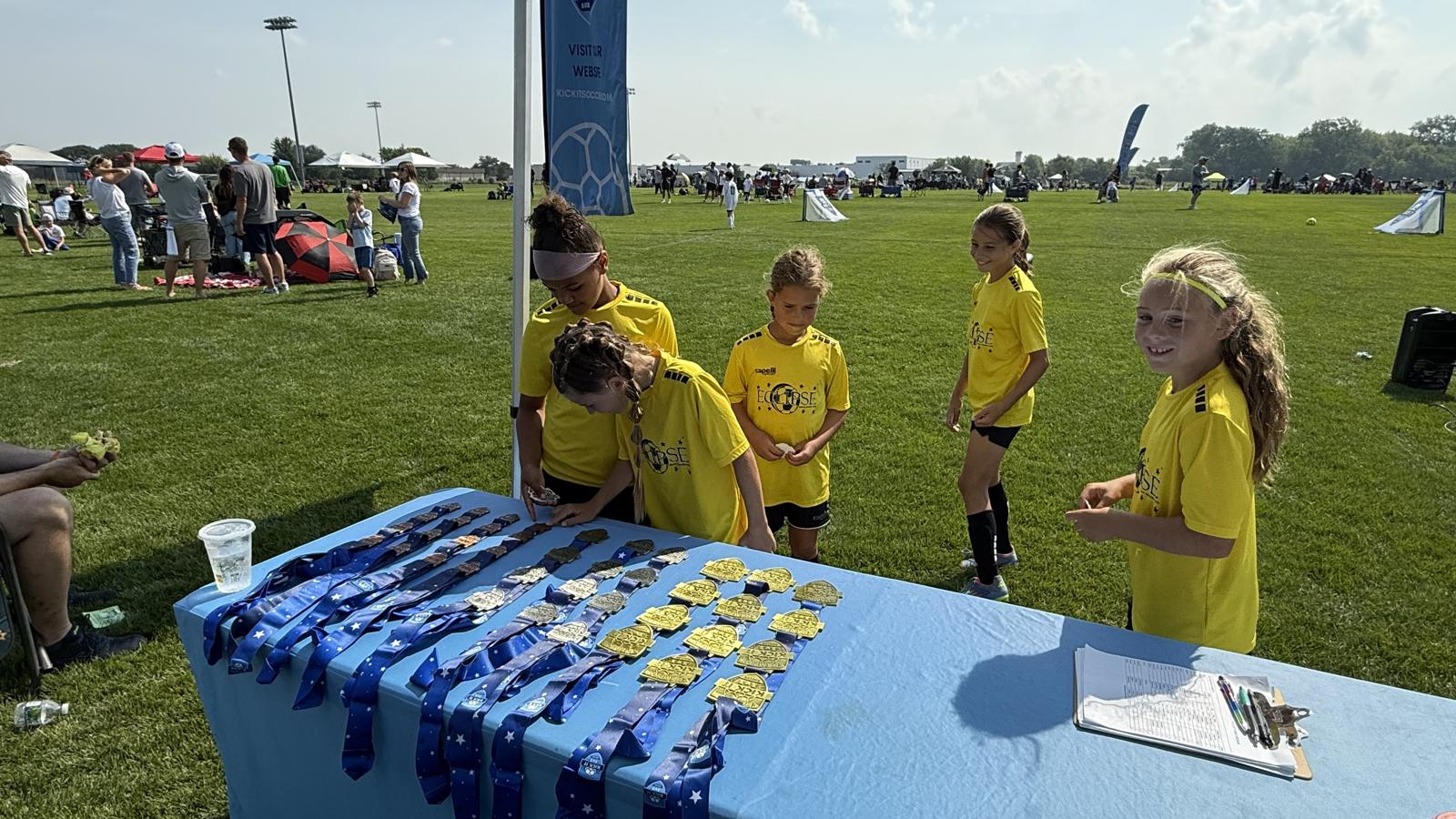
Youth age divisions: A youth team has to play in the division of the oldest player on the team. For example, if a team has one 2013 player and four 2014 players, they play in the 2013 division or older. Sometimes we combine two age groups, like a 2013/2014 division, but that team is still considered a 2013 team. We may combine divisions, and we often have a designated high school division at our events.
Boys, girls, and coed: If a division is girls only, only girls are allowed to play. Girls can play in boys divisions if they want to. Boys may not play in girls divisions. Either can play in a coed division.
Adult divisions: We have one adult division at each event, which can be made up of men, women, or both. If more than four men's, women's, or coed teams register for an event, we'll consider splitting them up. In an adult coed division, at least one woman has to be on the field at all times.
Proof of age: Every player must be ready to show a hard copy or digital copy of proof of age if asked.
3v3 Soccer Field Size and Goals
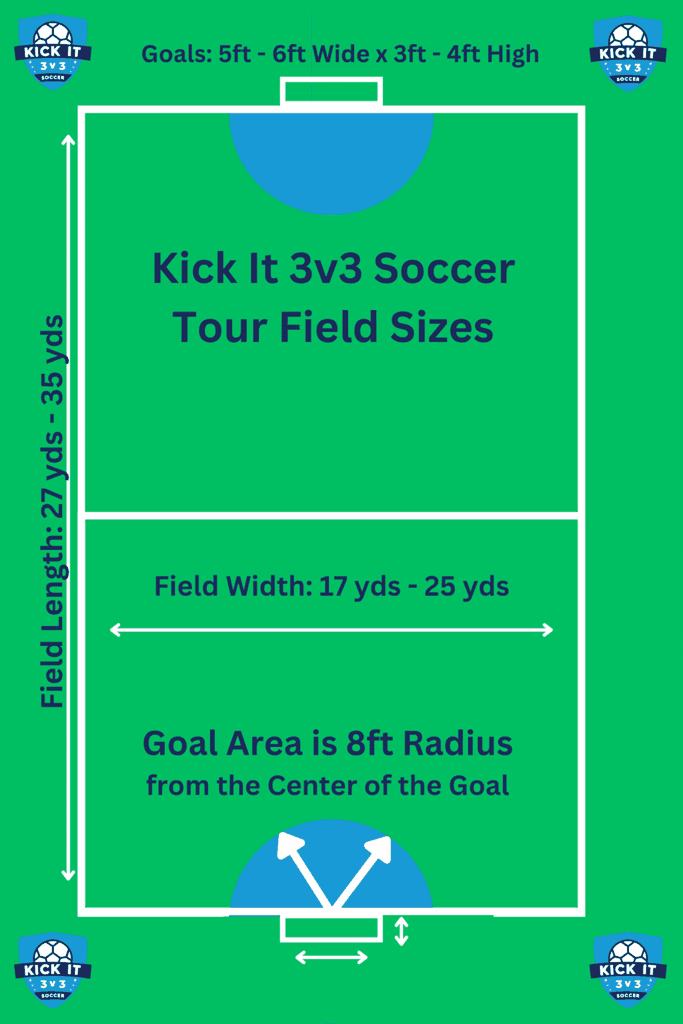
Like 11v11 fields, 3v3 fields vary in width and length based on the space we have and a few other factors. Kick It 3v3 fields range from 15 to 25 yards wide and 25 to 35 yards long. We always shoot for about 20 yards wide by 30 yards long, because that space keeps the ball in bounds enough and keeps players engaged.
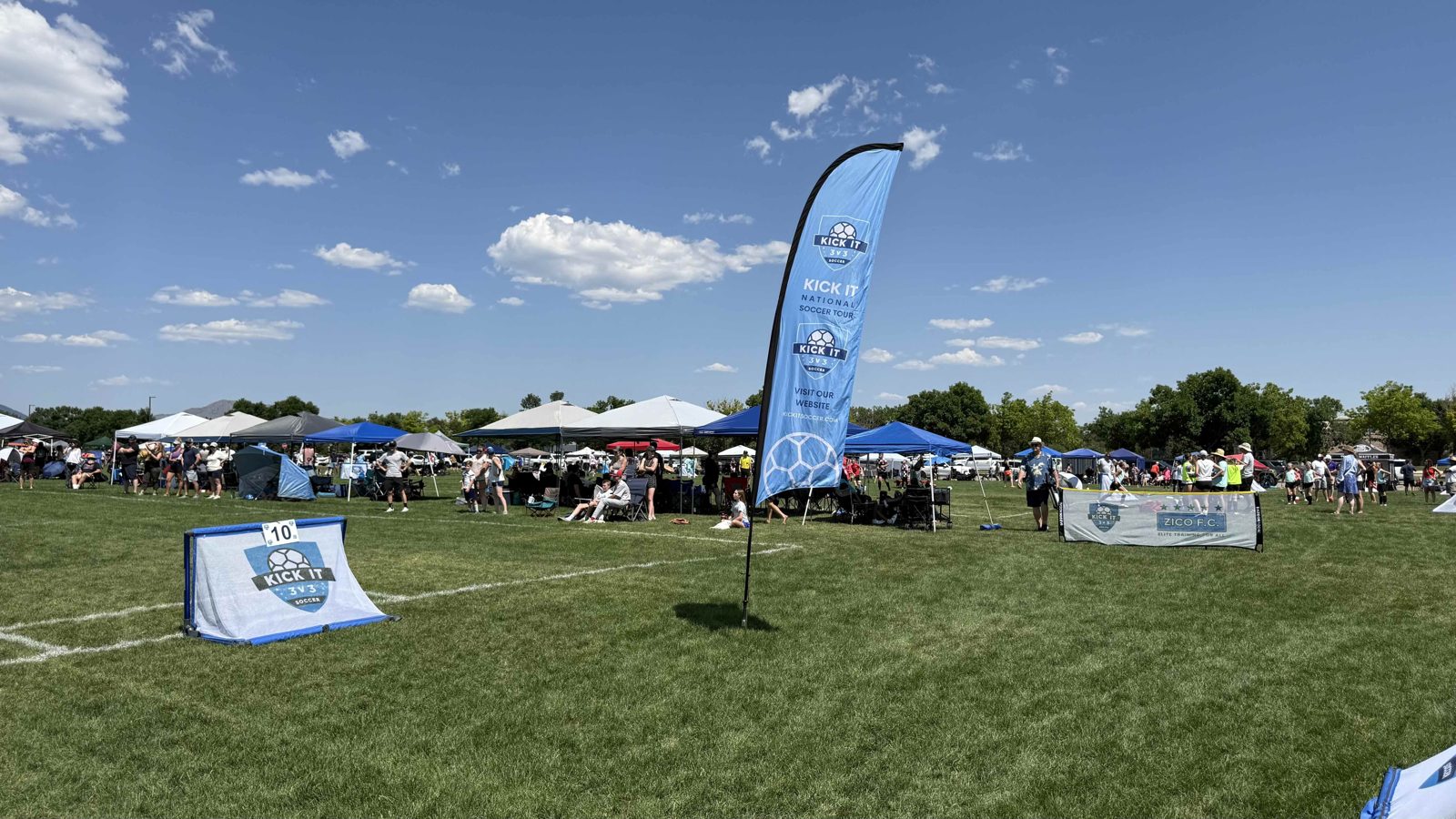
We've been bringing field size down over the years because American players are a lot better than they were in 1990 when we started, and smaller fields are better for skill development.
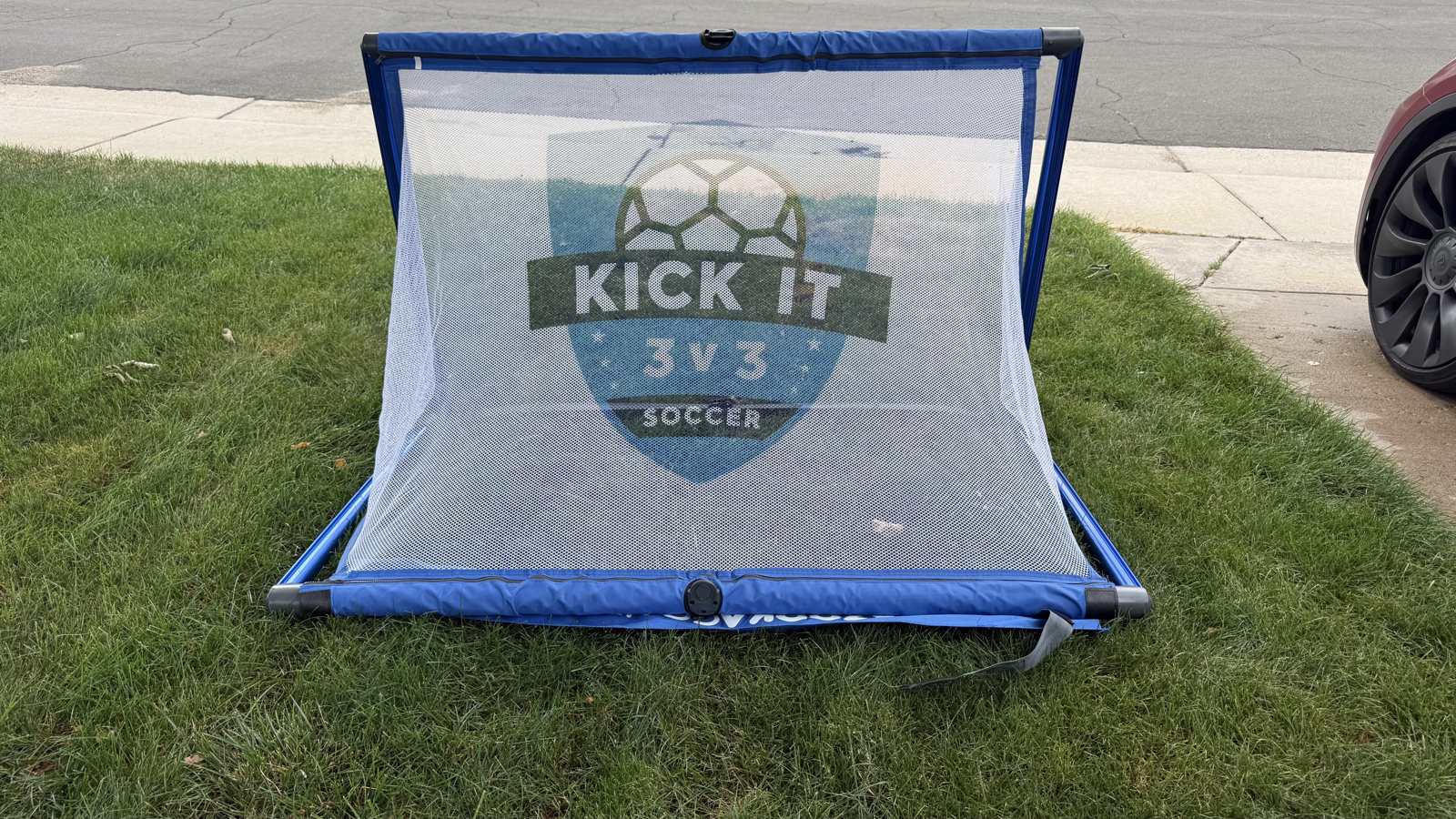
3v3 goals range from 4 feet wide by 2 feet high up to 6 by 4, and in most cases we prefer 5 feet wide by 3 feet high. Field and goal details, plus how to set up your own field, are on our 3v3 soccer field size and goals page.
The Crease (Goal Box or Arc)
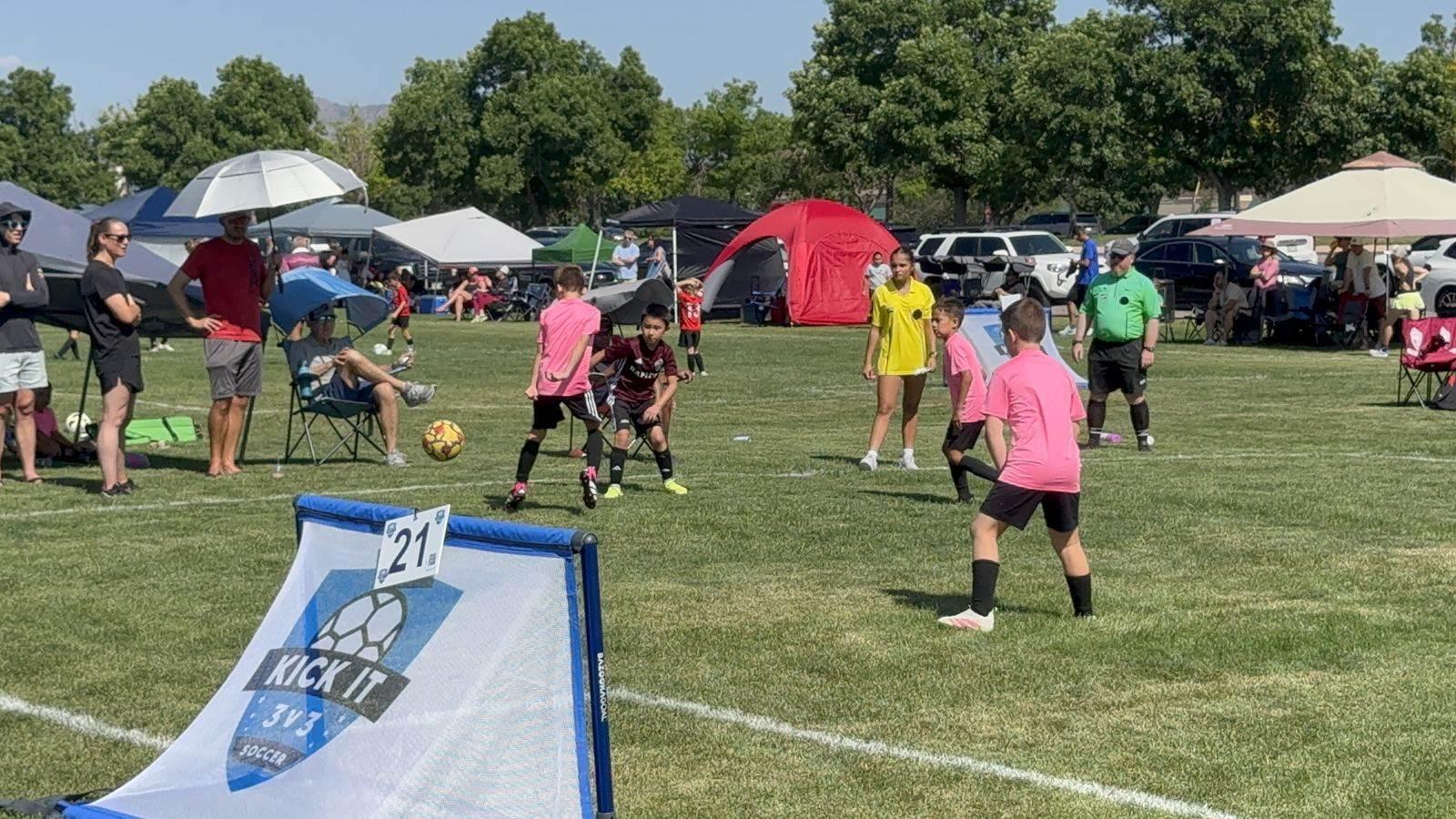
All Kick It 3v3 tournaments have a crease in front of each goal where players aren't allowed to touch the ball. We typically use one of two sizes: a half circle in front of the goal that extends 8 feet out (it looks like a hockey crease), or a box 12 feet wide by 6 feet deep.
Why no goalkeepers?
We don't use goalkeepers in Kick It 3v3, for a couple of reasons. First, the goal is small. Scoring on a 5 x 3 goal is a lot like picking out the corner around a keeper in a bigger game. You have to aim your pass or your shot, and that's a skill every player needs anyway. Second, the crease keeps the game high scoring. Nobody can park a pretend keeper on the goal line and turn the game into a kicking contest, so the team that moves the ball and finishes well wins.
"The goal is so small, scoring on it is like putting the ball in the corner around a keeper. And with the crease, nobody gets to park a pretend keeper in front of it." — Dan Stratford, CEO and co-owner, Kick It 3v3 Soccer
- Players may run through the crease but can't touch the ball while inside it.
- Any ball or part of a player's body on the crease line is considered inside.
- A defender cannot touch the ball in the crease of the goal they're defending. If they do, it's an automatic goal for the other team.
- If an attacking player touches the ball in the crease, it's a goal kick for the other team.
- If the ball stops completely inside the crease, the defending team gets a goal kick.
This is the rule that surprises new teams the most. The first time a defender reaches in to save one and gives up a goal for it, everybody learns it pretty quickly.
How Long Are 3v3 Soccer Games?
Each Kick It match is two 12-minute halves with a 2-minute halftime. A full game runs about 26 minutes from kickoff to final whistle.
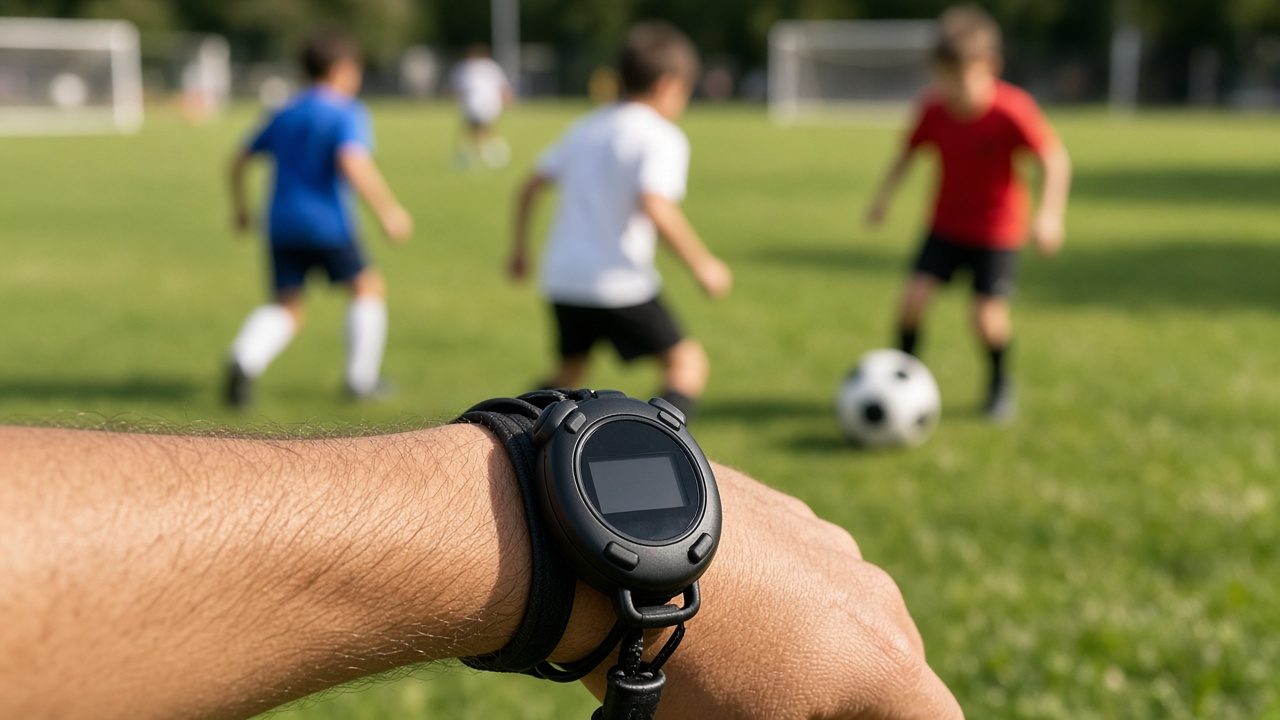
Why 12-minute halves? They give players the most playing time we can fit into a half-hour game slot. A lot of other 3v3 events play shorter games. We want kids and adults to get a lot more time on the ball for their entry fee, so we use about as much of the slot as we can.
The 12-goal cap. Once a team scores 12 goals, the score at that moment becomes the final score. But the game doesn't stop. Both teams keep playing out the time, so everybody still gets their time on the ball. For example, if it's 12-4 at halftime, 12-4 is the final, and the teams play the second half anyway. There's no rule that ends the game at 12. The score just freezes there, and the frozen score is the final.
Why a cap at all? It rewards scoring. One way to win a Kick It game is to get to 12 as fast as you can, so teams attack. And it ties into our blowout rule: a team that's down by 6 can add a player, which keeps the game competitive while the leading team is chasing 12.
- The half ends when time expires. Goals scored after the buzzer don't count.
- Pool play games that end tied stay tied.
- Playoff games must have a winner (see overtime).
How many games will we play? Our one-day events guarantee 4 games, and can go as high as 6 or 7 in rare cases with playoff brackets. Our multi-day events have a minimum of 6 games and can go to 8, or higher in rarer cases.
How long is a tournament day? It depends on the event, the number of teams, and how far you go in the playoffs. We send a preliminary schedule 2 to 3 days before the event, and the final schedule goes out 2 days before. Most of our events are one day, so plan on games anywhere from 9 a.m. to as late as 5 p.m. You might play 9 to 3, or you might not start until 11 and go until 5. The bottom line is, keep the whole day open.
3v3 Soccer Equipment Rules
Shin guards: All players in a high school division or younger must wear shin guards or they can't play. If available, you can rent shin guards from the Kick It tent for $5 with a $10 refundable deposit, or we'll hold a driver's license until they come back.
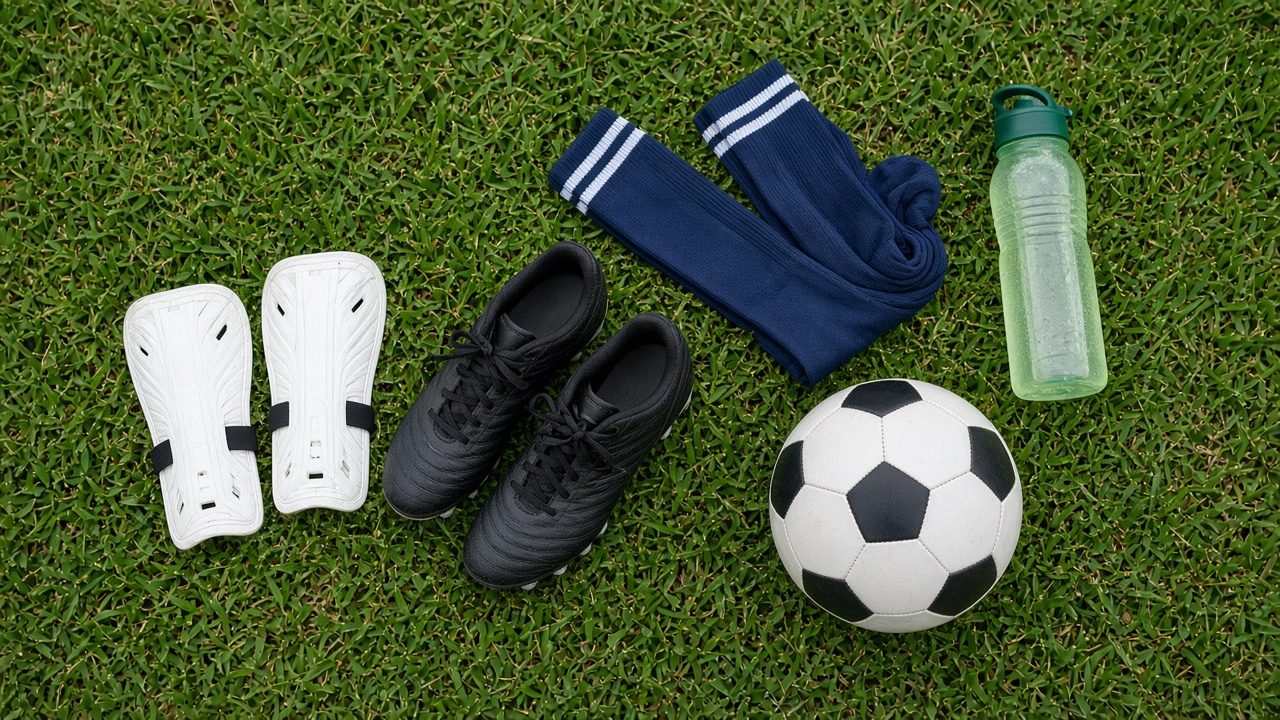
Game balls: Teams bring their own game balls. Recommended sizes:
| Age | Ball size |
|---|---|
| U8 and younger | Size 3 |
| U9 to U12 | Size 4 |
| U13 and older | Size 5 |
If a team plays up in an older age division that uses a bigger ball, they have to play with the bigger ball.
Shoes: Any soccer shoes that match the field conditions. If an event is indoors, we'll let you know if cleats aren't allowed.
Uniforms: Your team doesn't need uniforms. All you need is a dark shirt and a light shirt for every player, or two different color shirts, so you're ready for the whole tournament if there's a color conflict. That's it.
Jewelry: The only jewelry that may be allowed is on the face or ears, unless the referee decides it's dangerous. Our goal is to keep everybody safe.
Special Gameplay Rules
No offsides. Offside doesn't apply in 3v3 soccer.
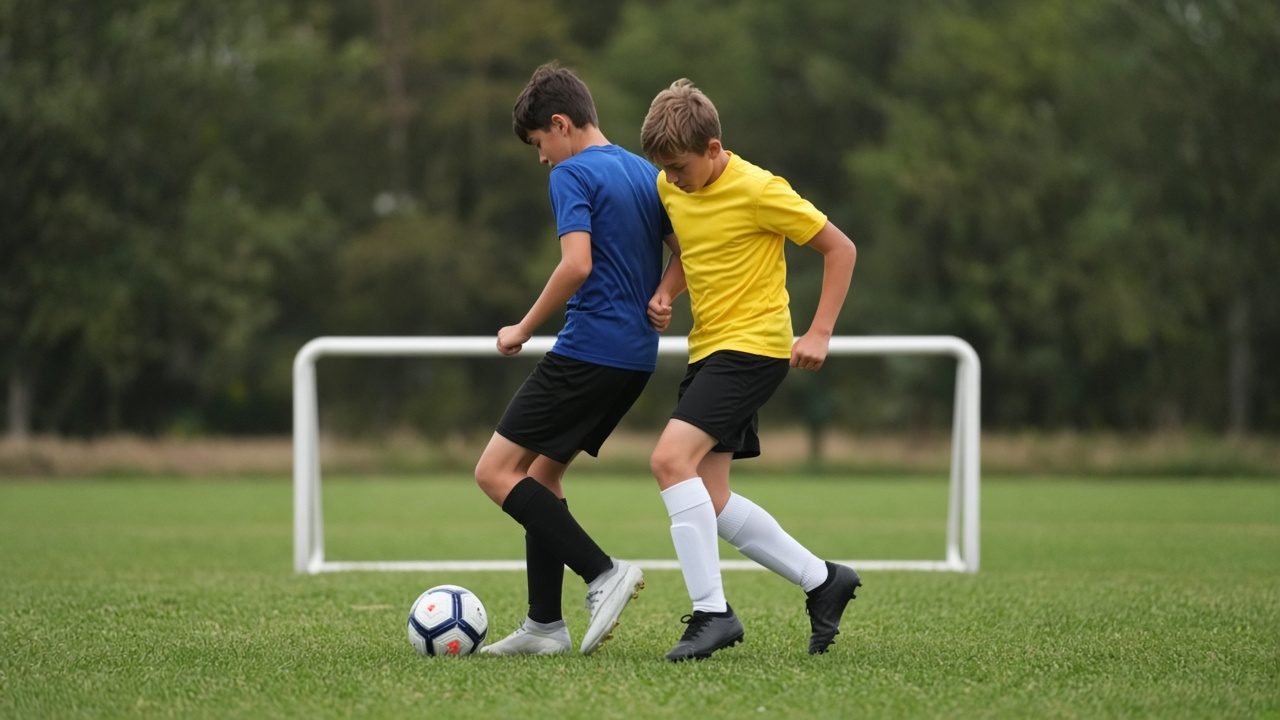
No sliding of any kind. Players can't slide tackle, slide to get the ball, or play the ball while on the ground at any time. If a player goes to the ground with at least one hand touching the ground, it's a slide. A slide results in an indirect kick, unless it stops an obvious goal-scoring opportunity. Then the referee may award a penalty kick, or a goal if the ball was very likely going in. (See PK, direct or indirect.)
Why ban all sliding? Safety first, especially at the younger ages, where a lot of kids have never been taught how to slide tackle properly. It also keeps players on their feet, playing the ball with skill instead of throwing themselves at it. And telling a "legal" slide tackle apart from just sliding is a gray area for everybody, players, parents and referees. So we keep it simple: no sliding, period.
Heading. Heading is allowed at U12 and older only. No heading at U11 and younger.
Goal scoring. A goal only counts if the ball was played from the attacking half. If the ball breaks the plane of the midfield line, it's considered in the offensive half.
Why this rule? We want teams to stay compact. If you can score from your own half, a team feels like it has to leave somebody standing way back in front of its goal, and that player is basically out of the game. When you have to get past midfield to score, the other team has enough time to get back in transition, so nobody needs to be stationed back there doing nothing. Everybody stays in the play.
Substitutions. Subs can be made on any stoppage with the referee's approval.
Restarts, Kick-Ins and the 10-Foot Rule
Kick-ins: Instead of throw-ins, the ball is restarted with a kick from the sideline. We use kick-ins because they keep the ball moving quickly, and that keeps the whole game moving quickly. No standing around lining up a throw.
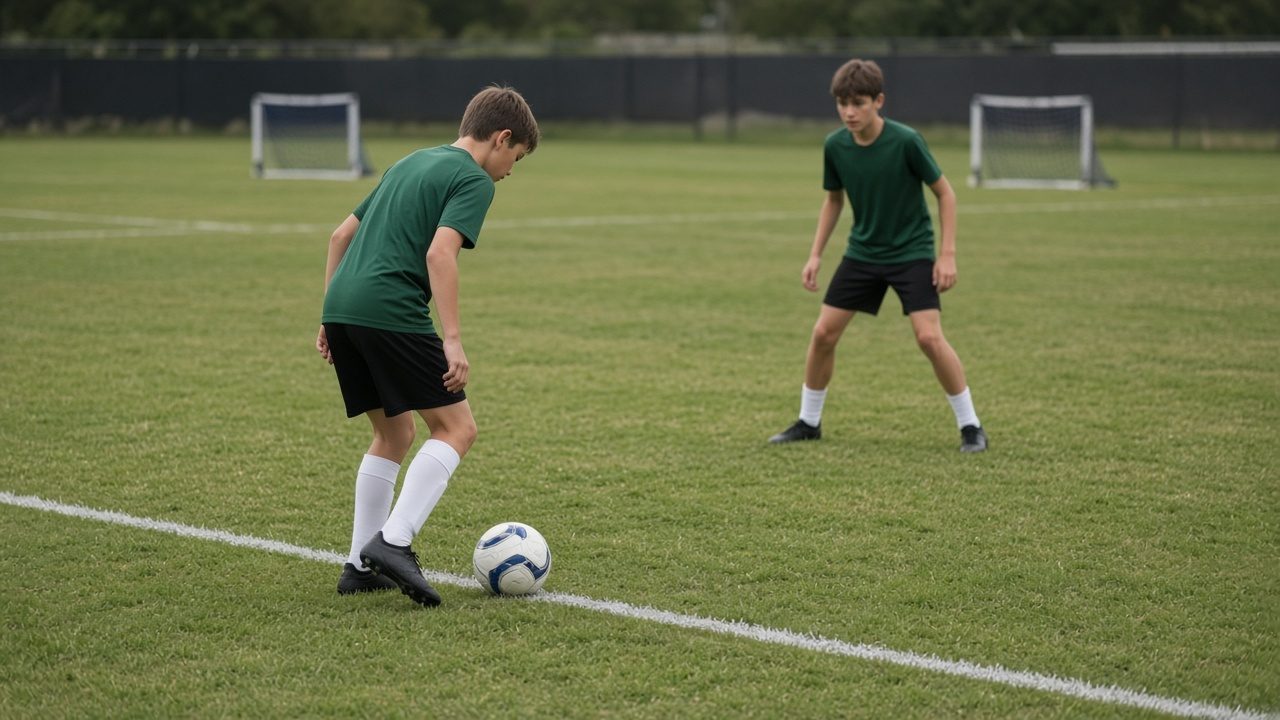
Direct and indirect kicks: Anything that would be a direct kick in full-sided soccer, like a trip or a push that isn't flagrant, is a direct kick here too. In your offensive half you can score off a direct kick, but the ball has to touch a player in the offensive half for the goal to count. Kick-ins, kick-offs and the other free kicks are indirect.
10-foot rule: On all dead-ball restarts, defenders must stay at least 10 feet from the ball. If the defending goal area is closer than 10 feet, the ball is placed 10 feet from the crease, in line with where the restart was.
5-second rule: Players have 5 seconds to restart play, or the other team gets the kick. This is up to the referee and usually doesn't apply to penalty kicks unless the time-wasting is intentional. Time-wasting on a penalty kick results in a goal kick for the other team.
Goal kicks: Can be taken from anywhere on the end line outside the crease. If it's taken from inside the crease, it's a corner kick for the other team.
Kick-offs: Can be played in any direction, to start the game or after a goal.
Penalty kicks: Awarded when any foul or infraction stops an obvious goal-scoring opportunity, and for a violent foul or any foul that draws a yellow or red card. The kick is taken from the kick-off spot with all other players behind the midfield line. If the penalty is missed, possession changes with a goal kick. Penalty kicks are not live plays. The full breakdown is in PK, direct or indirect.
Penalty Kick, Direct or Indirect? The Most Misunderstood Rules
If we had to pick the two rules people ask about most at the Kick It tent, it's sliding and penalty kicks. Here's how it works.
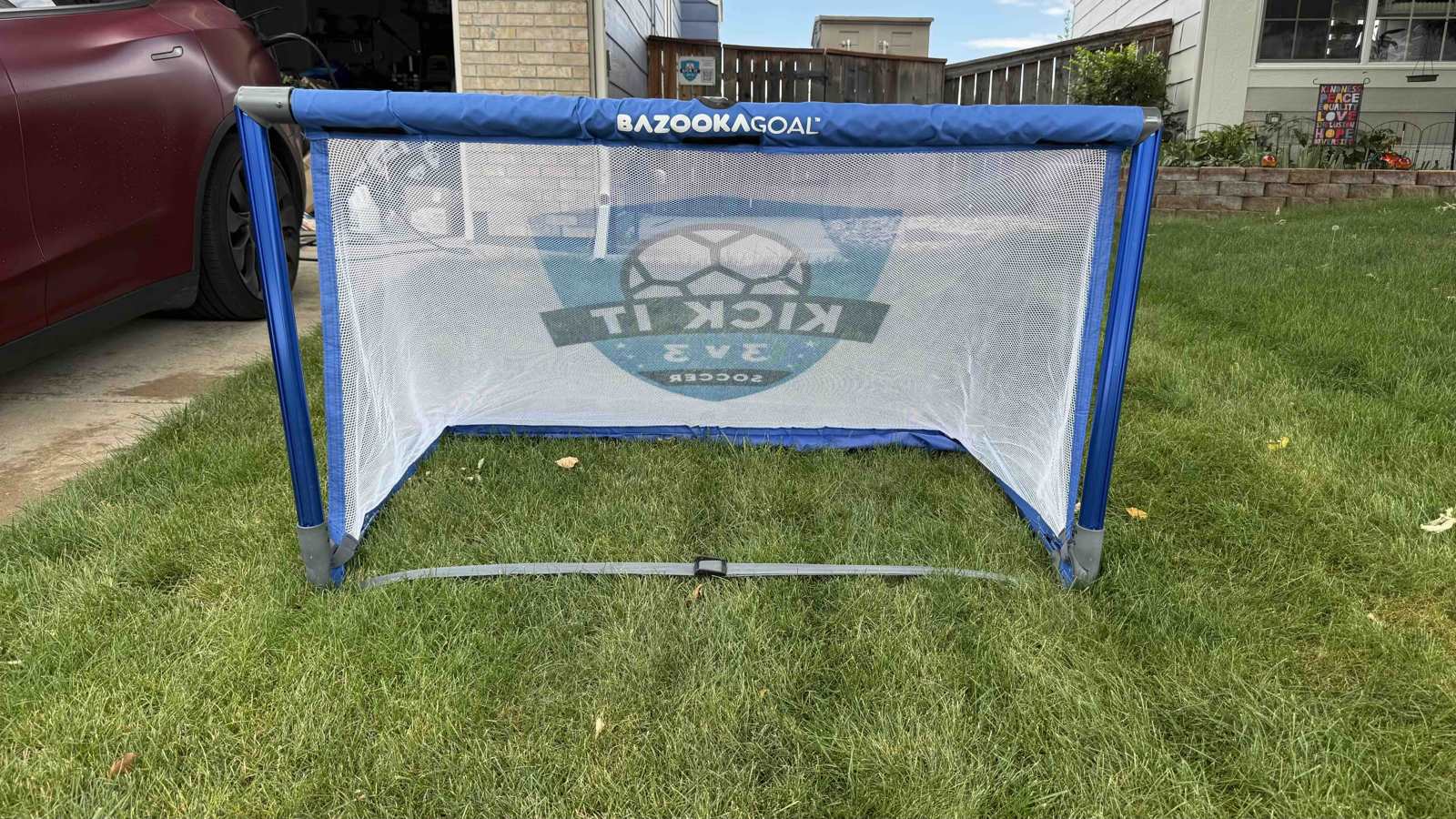
A penalty kick is for stopping an obvious goal-scoring opportunity, or for a violent foul or one that draws a yellow or red card. A regular trip, a push, dangerous play, obstruction or a slide that doesn't stop an obvious goal-scoring chance is not a penalty kick. It's a free kick, and the kind of free kick depends on the foul.
| Situation | Call |
|---|---|
| Any foul or infraction that stops an obvious goal-scoring opportunity | Penalty kick |
| A violent foul, or any foul that draws a yellow or red card | Penalty kick |
| Anything that would be a direct kick in full-sided soccer, like a non-flagrant trip or push, that doesn't stop an obvious goal | Direct kick |
| Dangerous play | Indirect kick |
| Obstruction | Indirect kick |
| Kick-in infractions | Indirect kick |
| A slide (player goes down with at least one hand on the ground), no obvious scoring chance stopped | Indirect kick |
A couple of reminders:
- You can score straight off a direct kick in your offensive half, but the ball has to touch a player in the offensive half for the goal to count.
- Penalty kicks are taken from the kick-off spot, with everybody else behind midfield.
- A defender cannot touch the ball in the crease of the goal they're defending. If they do, it's an automatic goal for the other team. If an attacking player touches the ball in the crease (the box), it's a goal kick for the other team.
"Sliding and penalty kicks are the two rules people misunderstand the most. A PK is for stopping an obvious goal. Most fouls aren't that." — Dan Stratford, CEO and co-owner, Kick It 3v3 Soccer
Pool Play Scoring and Tiebreakers
Points:
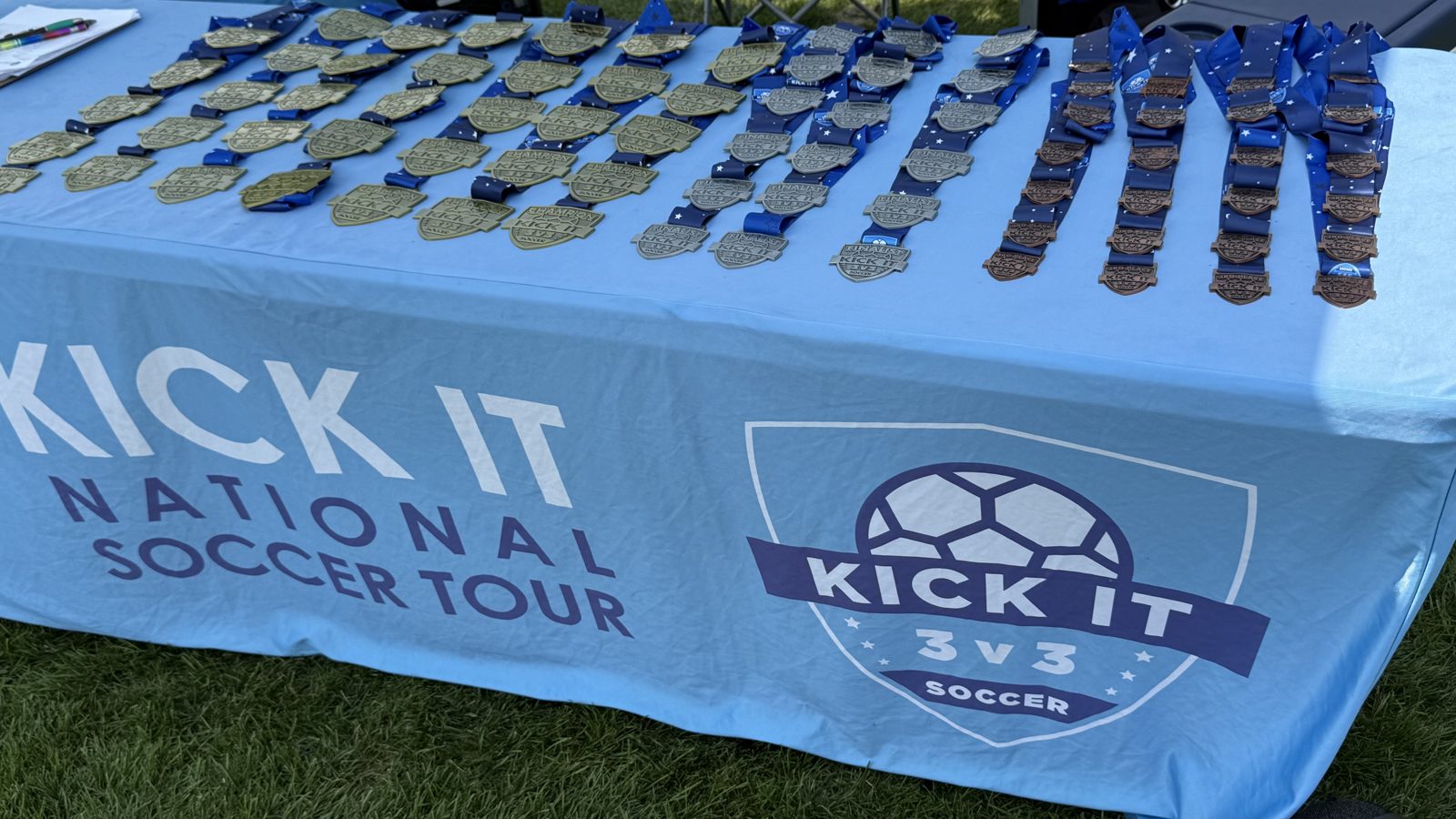
| Result | Points |
|---|---|
| Win | 3 |
| Tie | 1 |
| Loss | 0 |
| Forfeit | Counts as a 5-0 loss |
Tiebreakers: If teams are tied in the standings, we rank them by:
- Head-to-head result (only when two teams are tied)
- Goal difference in pool play
- Fewest goals allowed
- Total goals scored
- If still tied, the system breaks the tie with a random coin flip
One thing we've learned watching a lot of pool play: goal difference matters. Don't take your foot off the gas in a game you're winning, and don't give up in a game you're losing. Every goal can count.
Playoff Overtime and Shootouts
If a playoff game is tied, we play a 3-minute sudden-death golden goal overtime. If it's still tied, the game is decided by a penalty shootout using the three players who were on the field at the end of overtime. Each player shoots from the center kick-off mark.

The Blowout Rule
When a team is down by 6, they may add one more player to the field. If they score and cut the lead to 5, they must take the extra player off. It keeps lopsided games competitive and gives the team that's behind more chances on the ball. It works hand in hand with the 12-goal cap: even when one team is running away with it, the game stays worth playing. And usually, the second day of a tournament, you get put in the right bracket and it's even a better day.
Cards, Sportsmanship and Forfeits
Referees can eject players or bench personnel for misconduct or serious fouls.
- Red card: ejection for the rest of the match plus the next game.
- Tournament director discretion: a player or coach can be removed for the rest of the tournament at the tournament director's discretion.
- Team officials: if a coach or team official commits misconduct and can't be individually identified, the senior coach present gets the card.
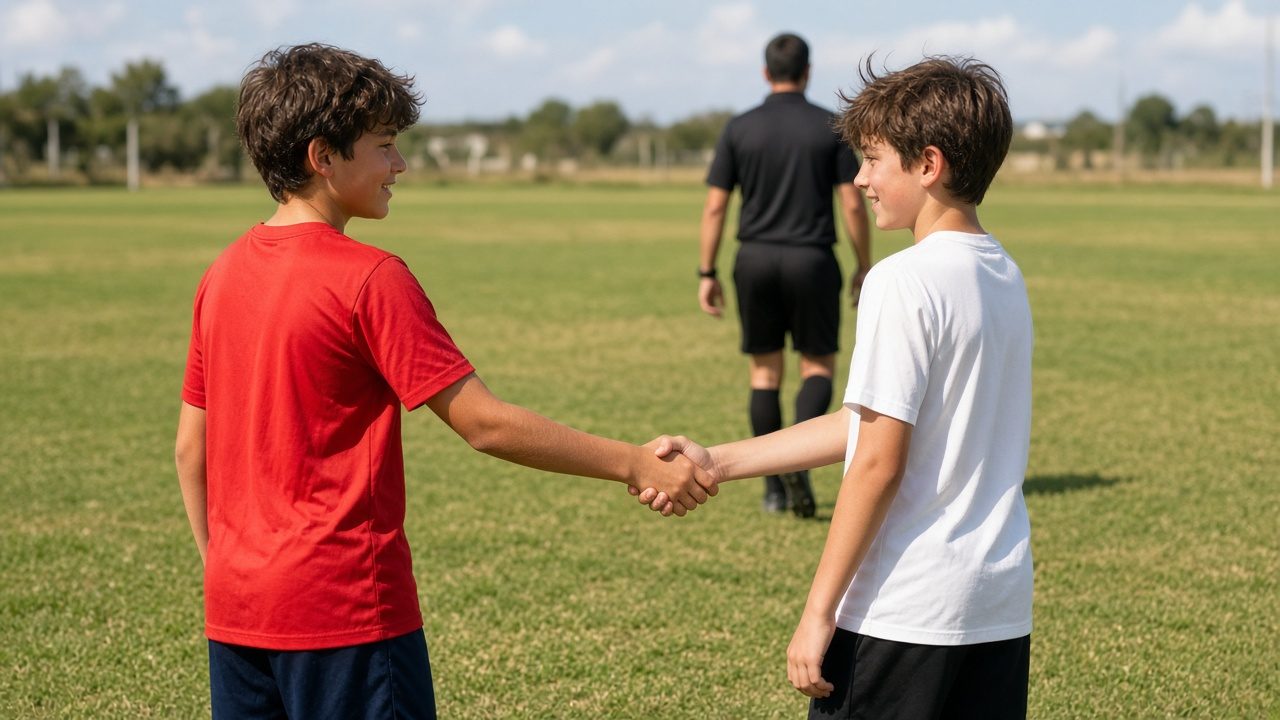
Sportsmanship: Players, coaches, and spectators are all expected to play fair and be good sports. Any abuse toward referees results in the team's immediate disqualification from the event. We mean it. Our referees are the reason there's a tournament.
Forfeits: A forfeited match counts as a 5-0 loss for the team that forfeits.
Parents on the Sideline
We ask one thing of parents during a game: the only thing you should be saying is encouragement.
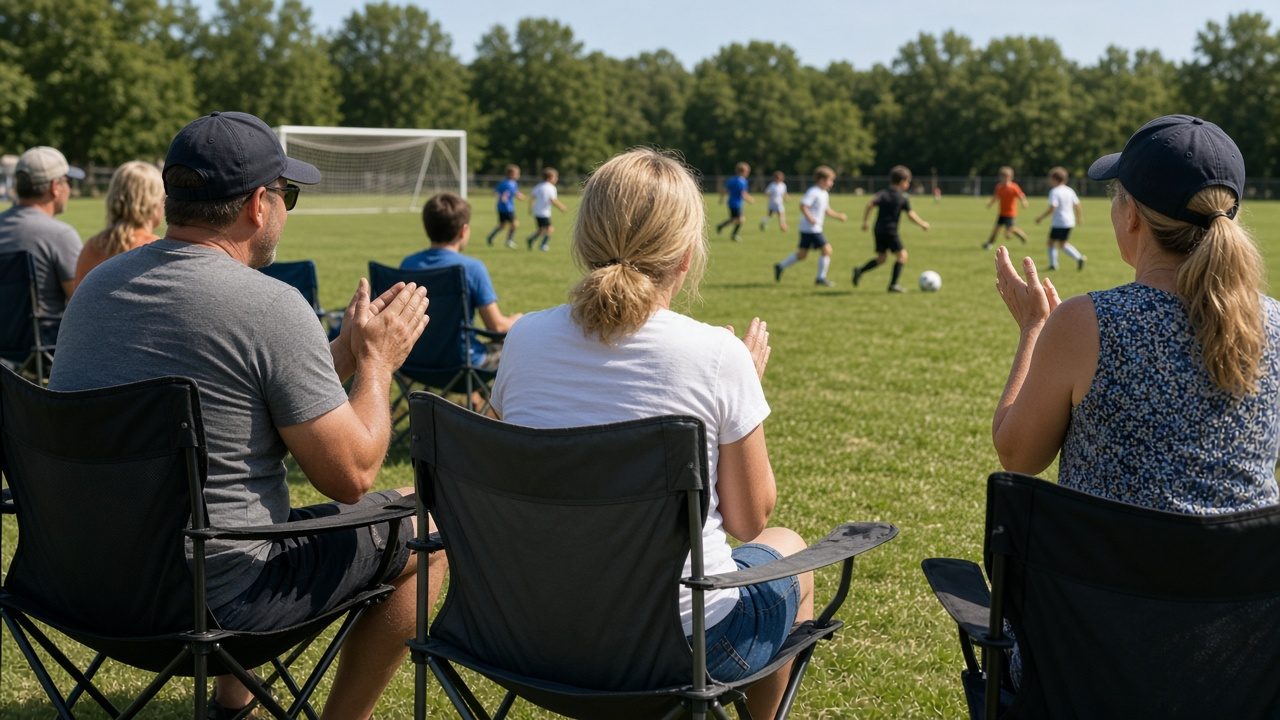
That means no "you're not trying hard enough." No pointing out mistakes. And honestly, not even giving direction. Shouting "get back!" sounds helpful, but the coach might want that player doing something completely different, and now your kid is hearing two voices. Unless the coach explicitly asks you to help, just cheer and be positive, and let the coach be the one to correct or reprimand. If your team doesn't have a coach and a parent is running it, that parent on the sideline is the coach. Stay positive and give direction when it's needed, but the less direction, the better. Let the kids play and figure it out.
Our CEO and co-owner has lived both sides of this, as a coach and as a dad in the bleachers.
"When I was young, I used to yell too much at my kids from the sidelines when I wasn't coaching them, though most of the time I coached them. As I got older and had more young kids playing, I became more disciplined. Other parents would ask me why I wasn't giving direction from the sidelines when we were watching our daughters play on the same team and I wasn't coaching. I maintain that you never give direction from the sidelines as a parent, because you don't really know what the coach wants. Unless the coach explicitly asks you to help, you just cheer your kids on, be positive and encouraging, and let the coach be the bad guy if he has to correct them. That's my experience, and I always try to behave that way, but I'm not always perfect." — Dan Stratford, CEO and co-owner, Kick It 3v3 Soccer
The same goes for referees. Respect them, even when you disagree. Any abuse toward a referee means the team is disqualified (see sportsmanship).
3v3 Soccer Rules for Kids and Parents
The rules above apply to every division, but here's what parents of young players usually want to know:
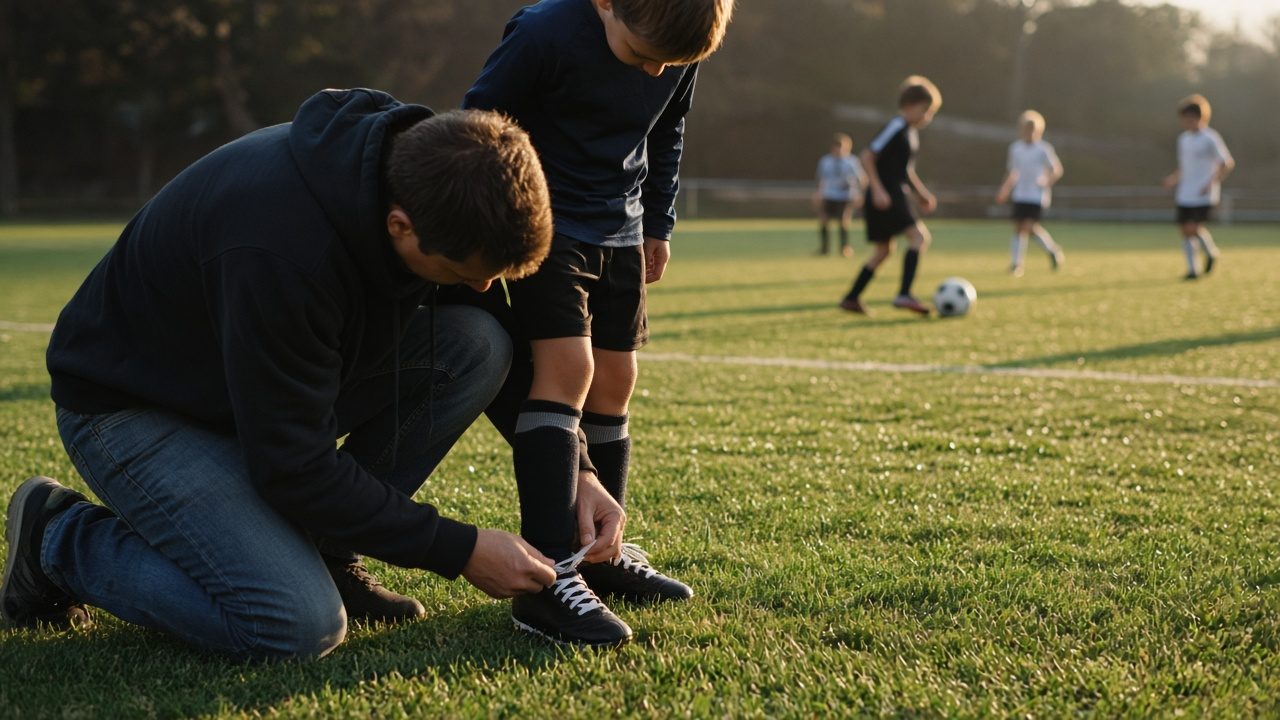
- Shin guards are required for high school divisions and younger.
- Bring the right size ball for the age group (size 3, 4, or 5).
- No uniforms needed. Just bring a dark shirt and a light shirt (or two different colors) for every player.
- No heading at U11 and younger. Heading starts at U12.
- Parents cheer, they don't coach from the sideline. Encouragement only. See parents on the sideline.
- You don't need a coach. A parent can just register the team and get everybody there. The kids figure out the game on the field.
If you're coaching or facilitating a young team, our 3v3 soccer coaching course and our 3v3 soccer drills and coaching page are good places to start.
Playing Well Within the Rules
Knowing the rules is one thing. Using them is another. No offsides means you can leave a player high. Kick-ins mean every out-of-bounds is a chance to play a quick restart before the other team is set. The crease means you have to finish from a little farther out, so shooting practice pays off. And because goals have to come from the attacking half, the long bomb from your own end doesn't count.
"The two most important touches are the first touch and the last touch." — Dan Stratford, CEO and co-owner, Kick It 3v3 Soccer
For more on how to play the small field, check out our 3v3 soccer strategy and tips.
3v3 Soccer Rules FAQ
How many players are on a 3v3 soccer team? Three play at a time. Rosters can have 3 to 6 players, and most teams have 4 or 5.
How long are 3v3 soccer games? At Kick It events, two 12-minute halves with a 2-minute halftime. If a team reaches 12 goals, that score is final, but both teams play out the time.
How many games do you play at a 3v3 tournament? Our one-day events guarantee 4 games. Multi-day events guarantee at least 6.
Are there goalkeepers in 3v3 soccer? Not at Kick It events. The goal is small enough that scoring is like aiming for the corner around a keeper, and the crease keeps anyone from playing pretend keeper.
Is there offside in 3v3 soccer? No. Offside doesn't apply in Kick It 3v3.
Are there throw-ins in 3v3 soccer? No. The ball is restarted with a kick-in from the sideline.
Can you slide tackle in 3v3 soccer? No. We ban all sliding. If a player goes to the ground with at least one hand touching the ground, it's a slide, and it's an indirect kick.
When is a penalty kick awarded in 3v3 soccer? When a foul stops an obvious goal-scoring opportunity, or for a violent foul or one that draws a yellow or red card. Other fouls are direct or indirect kicks.
What should parents say from the sideline? Encouragement only. Let the coach do the coaching.
Is heading allowed in 3v3 soccer? At Kick It events, heading is allowed only at U12 and older. No heading at U11 and younger.
What size is a 3v3 soccer field? Kick It fields range from 15 to 25 yards wide and 25 to 35 yards long. We aim for about 20 by 30 yards.
What happens if a game is tied? Pool play games stay tied. Playoff games go to a 3-minute golden goal overtime, then a penalty shootout.
What is the crease in 3v3 soccer? The area in front of each goal where no one can touch the ball. At Kick It events it's a half circle in front of the goal that extends 8 feet out or a box 12 feet wide by 6 feet deep.
Do we need team uniforms for a 3v3 tournament? No. All you need is a dark shirt and a light shirt, or two different color shirts, so you're ready for the whole tournament.
What is the blowout rule? A team down by 6 can add a fourth player. If they cut the lead to 5, the extra player comes off.
Ready to Play?
Now you know the rules. Find a Kick It tournament near you, round up three to six players, and get your team registered. Want to bring a Kick It event to your club, school, or town? Host a 3v3 tournament with us.